Best Portable Phone Chargers USA
Battery anxiety is real: 72% of smartphone users report their phones dying at the worst possible moment. The solution? A reliable portable phone charger. We've curated the top 50 portable chargers available in the USA, from budget-friendly power banks to premium multi-device charging stations, ensuring you'll never face a dead battery again.
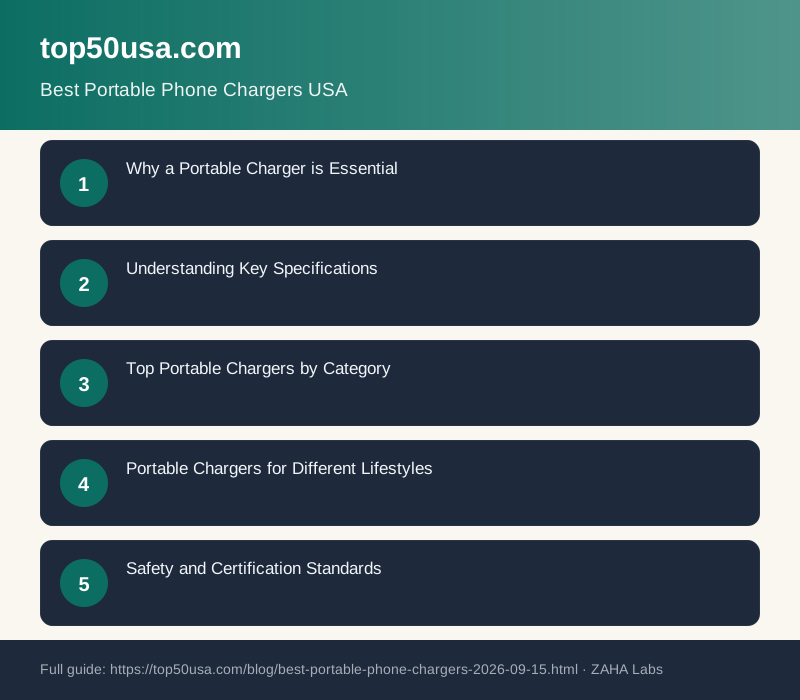
Why a Portable Charger is Essential
Modern smartphones demand constant power. Between video streaming, navigation, social media, and work apps, the average smartphone battery drains within a single day. Remote workers, frequent travellers, and outdoor enthusiasts face even greater challenges. A quality portable charger bridges the gap between your last charging opportunity and your destination, transforming how you work and travel.
The right portable charger isn't just about capacity—it's about reliability, speed, and durability. Investing in a quality power bank costs £30–80 today but eliminates countless moments of frustration and missed opportunities tomorrow.
Understanding Key Specifications
Capacity (mAh)
Measured in milliamp-hours, capacity indicates stored energy. A typical smartphone battery holds 3,500–5,000 mAh. A 10,000 mAh charger typically delivers one full recharge; 20,000+ mAh provides two or more charges. Account for 15–20% efficiency loss during the charging process—a 20,000 mAh charger won't deliver exactly two full charges due to heat dissipation and voltage conversion.
Charging Speed (Watts)
Measured in watts (W), charging speed determines recharge duration. Standard chargers operate at 5W; fast chargers deliver 18W–65W; ultra-fast chargers exceed 100W. The Anker PowerCore 20000 mAh balances capacity and speed effectively, charging most devices in 90 minutes or less.
Port Variety
USB-C has become the universal standard, offering reversible connectors and faster power delivery. Older devices may require micro-USB or Lightning ports. Premium chargers include multiple port types, allowing simultaneous charging of phones, tablets, and laptops. Choose chargers supporting USB-C as your primary input/output port.
Top Portable Chargers by Category
Budget-Friendly (Under £25)
Perfect for backup chargers or occasional users, budget models provide basic functionality without advanced features. Capacity typically ranges from 5,000–10,000 mAh. These chargers work reliably for emergency situations but may lack fast-charging support or premium build quality.
Mid-Range (£25–£60)
This category offers exceptional value, combining solid capacity (15,000–25,000 mAh), fast charging, and durable construction. Most everyday users find mid-range chargers perfectly adequate. Popular options include models with dual USB ports, LED displays showing remaining capacity, and temperature regulation features.
Premium (£60+)
Premium chargers introduce advanced features: wireless charging pads, AC outlets for laptop charging, digital displays with smart diagnostics, and exceptional build materials. The Belkin Boost Charge Pro exemplifies this tier, offering wireless charging combined with multiple wired ports—ideal for professionals juggling multiple devices.
Portable Chargers for Different Lifestyles
For Daily Commuters
Commuters benefit from lightweight, compact designs fitting easily into bags or pockets. Capacity of 10,000–15,000 mAh provides adequate power for a full day. Fast-charging technology ensures quick top-ups during lunch breaks or during your commute. Weight matters—aim for chargers under 300 grams.
For Outdoor Adventurers
Hikers, campers, and outdoor enthusiasts require rugged, waterproof chargers withstanding drops, dust, and moisture. Many outdoor chargers include built-in solar panels, torches, and compass features. Durability trumps capacity in this category—a weatherproof 10,000 mAh charger outperforms a fragile 25,000 mAh model.
For International Travellers
Frequent fliers need compact chargers under 100 Wh capacity (approximately 27,000 mAh) to comply with airline regulations. Multi-port designs supporting USB-C, Lightning, and micro-USB ensure compatibility across various devices. Consider chargers with foldable plugs to minimise luggage space.
For Families and Professionals
Households with multiple devices benefit from high-capacity chargers featuring 4+ ports. Advanced power distribution prioritises smartphones over secondary devices, optimising charging efficiency. A 30,000+ mAh charger with simultaneous charging ports can handle an entire family's devices during car trips or office hours.
Safety and Certification Standards
Always prioritise chargers bearing FCC, CE, or UL certification marks. These certifications guarantee compliance with electrical safety standards, electromagnetic compatibility, and thermal protection requirements. Uncertified chargers pose genuine risks: battery damage, device overheating, potential fires, and data loss.
Reputable manufacturers like Anker, Belkin, and RAVPower invest heavily in quality components and rigorous testing protocols. Their warranty coverage typically spans 18–24 months, providing reassurance that the manufacturer stands behind their product.
Tips for Maximising Charger Lifespan
- Avoid exposing chargers to extreme temperatures (below 0°C or above 45°C)
- Don't leave chargers fully charged for extended periods—partially discharge monthly
- Use original or certified cables to prevent connector damage
- Clean charging ports monthly using a dry cotton swab
- Store chargers in protective cases during travel to prevent physical damage
- Avoid leaving chargers in direct sunlight or humid environments
FAQ
How many times can a portable charger recharge my phone?
A 10,000 mAh charger provides approximately one full recharge for most smartphones. A 20,000 mAh charger delivers roughly two full recharges. Actual numbers vary depending on your phone's battery capacity and charging efficiency. Newer phones with larger batteries (5,000+ mAh) require proportionally larger power banks for multiple charges.
Can I bring a portable charger on an aeroplane?
Yes, but with restrictions. TSA permits portable chargers with capacity under 100 Wh (approximately 27,000 mAh) in carry-on luggage. Most consumer chargers comply with this limit. However, chargers exceeding this capacity must remain in checked baggage. Always verify your airline's specific policies before flying, as some carriers have stricter regulations.
Do fast chargers damage smartphone batteries?
Modern fast chargers with proper temperature regulation won't damage batteries. Manufacturers design phones to work optimally with corresponding fast-charging speeds. Select chargers from reputable brands featuring built-in safeguards like over-current protection, over-temperature monitoring, and automatic voltage regulation.
What's the lifespan of a portable charger battery?
Quality portable chargers typically last 3–5 years with proper maintenance. Lifespan depends on usage frequency, charging habits, and environmental conditions. Lithium-ion batteries gradually lose capacity over time—expecting 500–1,000 complete charge cycles is reasonable before capacity degrades to 80% of original.
Is USB-C truly better than older charging standards?
Yes. USB-C offers superior charging speeds (up to 100W), reversible orientation eliminating connector frustration, and enhanced data transfer capabilities. Older standards (micro-USB, proprietary connectors) max out at 18–24W. Since USB-C is now standard across most new devices, purchasing USB-C chargers future-proofs your investment.